



Why do fresh sheets, clear surfaces and everything back in its place feel so good?
Our relationship with clean may go deeper than simply preferring things to be tidy. In one National Sleep Foundation poll, 86% of people said the comfortable feel of their sheets and bedding was important to getting a good night’s sleep.
Research has also found links between how people experience their home environment and patterns of mood and stress. In one study, women who described their homes as more cluttered and unfinished showed a different daily cortisol pattern from those who described their homes as more restorative.
More recent research goes a step further. Across experiments involving more than 3,000 people, researchers found that both actual cleaning and even watching cleaning behaviour could reduce some of the effects experienced after stressful situations.
The fresh-sheet feeling and the Sunday reset around it may be doing more than resetting the house. But there’s another side to the wellbeing conversation: what are we actually cleaning with?
We’ve become used to scrutinising what goes into our skincare. We look for considered ingredients and question anything unnecessarily harsh. Yet we rarely give the same thought to what we wash our clothes, sheets and towels in, or what we use across the surfaces and spaces we live in every day. Homecare deserves the same consideration.
And powerful cleaning isn't necessarily about stronger chemistry. Cleaning is really a carefully balanced interaction between water, formulation and the dirt you're trying to remove. Surfactants help water reach a surface, then surround oils and dirt so they can be lifted away and rinsed off. The clever part is getting those ingredients to work effectively together.
Water itself matters too. Hard water contains minerals such as calcium and magnesium that can interfere with how effectively surfactants clean. In laundry, those minerals can also contribute to build-up and dullness over time.
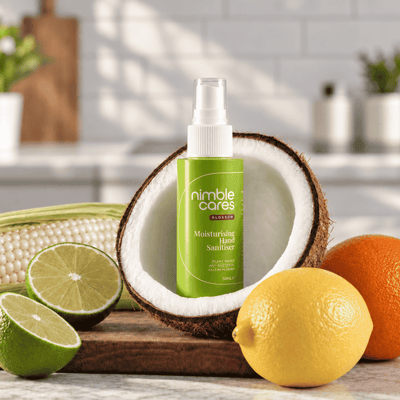
That's why our formulas combine plant-based surfactants derived from sources including coconut and corn with natural water softeners that tackle hard-water minerals helping the cleaning ingredients do their job rather than simply compensating with more detergent.
It’s a different way to think about clean. Not more product, more ingredients or a stronger formula for every job, but plant-based, skincare grade, biodegradable ingredients chosen to work intelligently together.
A deep clean doesn’t have to mean harsher chemistry or a cupboard full of products. It should mean a deep cleanse in the same way we cleanse our skin, and in turn we are also looking after our skin too.
If our homes have become part of how we look after ourselves, perhaps it’s time we thought a little more carefully about how we look after them too.