


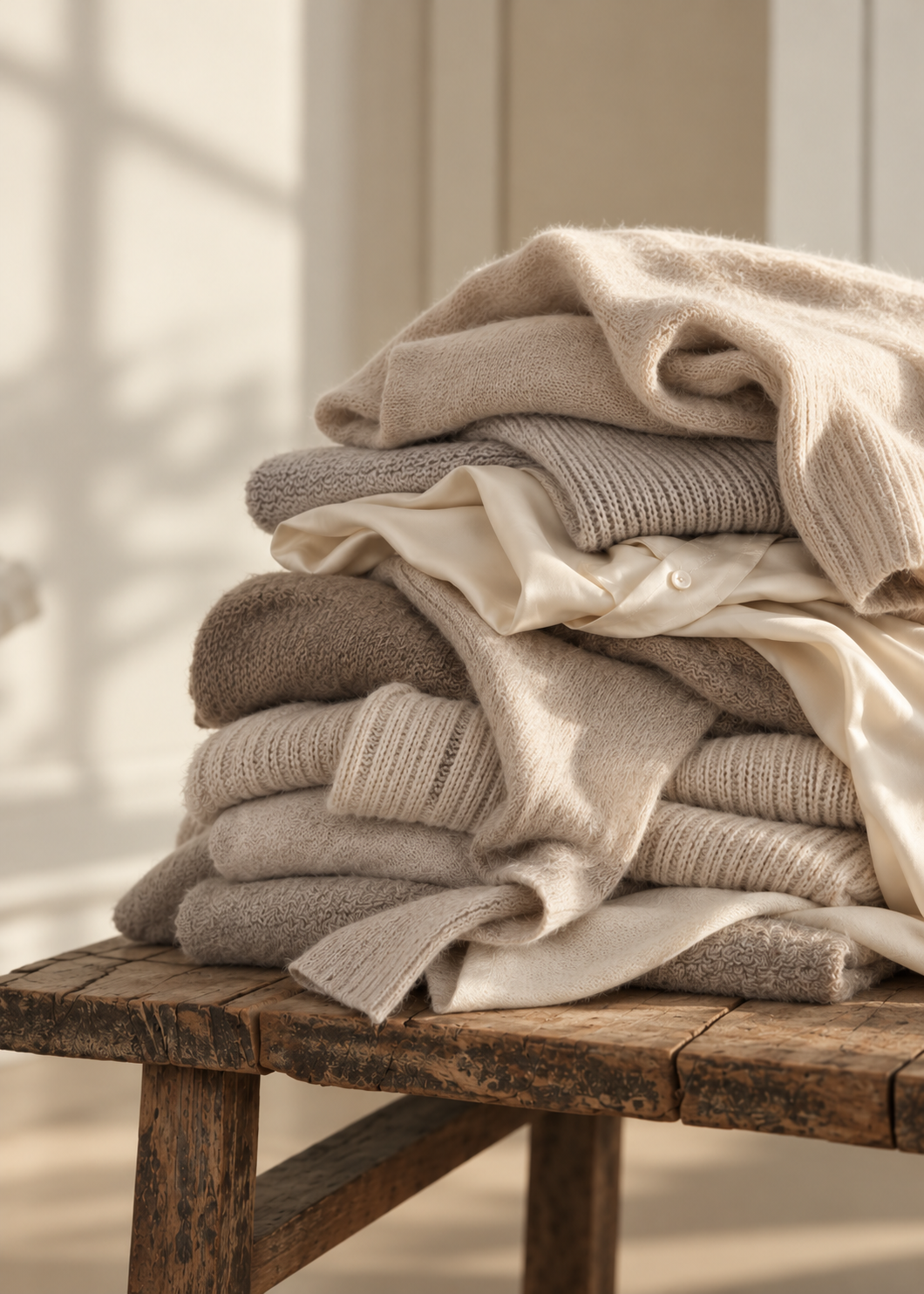
What's in your detergent? We come clean on what matters for knitwear.
Your cashmere jumper is made of keratin, the same protein found in your hair and nails. Wool is too. Silk is also made of protein, although a different kind.
Which makes this rather interesting: some laundry detergents contain enzymes specifically designed to break down proteins.
They're called proteases, and they're very good at tackling certain stains, including egg and blood. Brilliant for stain removal, but not necessarily for your favourite wool jumper. When the fabric itself is made of protein, the chemistry deserves a closer look. It's one reason why choosing the right detergent matters when washing wool, cashmere and other delicate fabrics.
And it's not the only surprising thing worth knowing about your knitwear.
THE SHRINKING TRUTH
We tend to blame hot water for shrinking jumpers. But temperature is only part of the story.
Look at a wool fibre under a microscope and you'll find tiny overlapping scales along its surface. When untreated wool gets wet and experiences repeated movement, those scales can catch against one another, causing the fibres to become entangled.
The result is felting: fabric that becomes denser, tighter and noticeably smaller.
Heat can make matters worse, but friction and agitation are important too. Which explains why a vigorous wash cycle isn't necessarily a good idea, even at a lower temperature.
LABELS BEFORE LEGENDS
There's a persistent belief that cashmere must always be hand-washed and wool should never go near a washing machine.
Neither is necessarily true.
Some wool and cashmere garments can be machine-washed. Others need hand washing or professional cleaning. It depends on how the garment has been made and finished, not simply how luxurious the fibre sounds.
Your care label is the best place to start.
Machine washable? Use the recommended wool cycle and temperature, with a detergent suitable for wool.
Hand wash only? Handle gently, avoid rubbing or twisting and don't wring out the water.
Dry clean only? Follow the label rather than experimenting.
And silk deserves particular attention. While it's also a protein-based fibre, different silk fabrics, dyes and finishes can behave very differently in water.
THE CASE FOR DOING LESS LAUNDRY
Here's a fact that might change how often you wash your knitwear.
Wool is naturally odour-resistant, its fibres can absorb moisture vapour and interact with some odour molecules, helping wool garments stay fresher between wears. This is one reason a wool jumper doesn't necessarily need washing every time you've worn it. Sometimes, a little fresh air will do.
Woolmark recommends airing wool garments between wears and allowing them time to rest. It's a useful habit, particularly for pieces that haven't picked up visible dirt or persistent odours.
Of course, if something is stained or genuinely needs washing, wash it but automatically sending every jumper straight to the laundry basket? Not always necessary.
WHY YOUR JUMPER SHOULD NEVER HANG AROUND
Here's another thing worth knowing about washing knitwear: what happens after the wash matters too.
Wool and cashmere can become heavy when wet. Hang a damp jumper on a hanger and the weight of the water can pull at the fabric, stretching the shoulders and changing its shape. Instead, gently press out excess water without wringing, then reshape the garment and dry it flat, away from direct heat.
And once it's dry? Fold it rather than hanging it up for long periods. A small habit that can make a noticeable difference to how your favourite knitwear holds its shape.
WHAT'S ACTUALLY IN YOUR DETERGENT?
Understanding what's in your laundry detergent makes the choice a little clearer.
Surfactants help lift dirt and oils from fabric so they can be rinsed away. Enzymes target particular types of stains. Proteases break down proteins, while other enzymes work on substances such as starches and fats.
Both have a purpose. But the best ingredients for removing a stain aren't automatically the best ingredients for every fabric.
For wool and cashmere, it's worth choosing a mild detergent formulated for delicate fibres. Protease enzymes are best avoided because they can affect protein-based fibres, while the detergent's overall formulation and pH also matter.
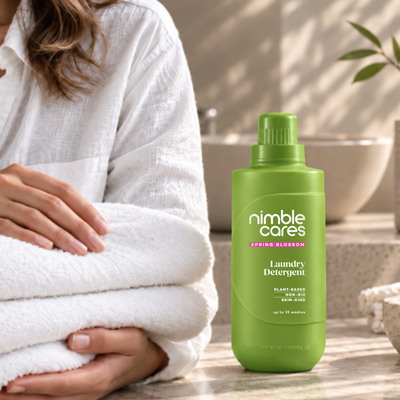
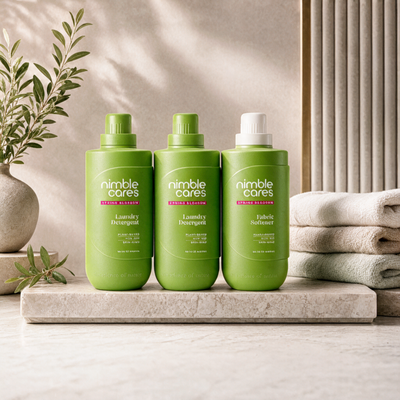
At Nimble Cares, our Laundry Detergent is non-bio and enzyme-free, formulated with plant-based, skincare-grade, biodegradable ingredients.
Take Pareth-7, a coconut-derived surfactant that helps lift oils and dirt. Or tri-sodium citrate, which helps manage the minerals in hard water so the cleaning ingredients can do their job.
Every ingredient has a purpose. Our detergent is suitable for woollens and delicates, without relying on enzymes to clean. Just follow the garment's care instructions.
A GOOD TIME TO GET INTO GOOD HABITS
As the temperature drops and our favourite jumpers make their way back into regular rotation, now is a good time to think about how we look after them.
Check the label. Choose a suitable detergent. Keep movement gentle. Air between washes when you can. And dry knitwear flat rather than hanging it up.
A little knowledge now can make all the difference to the pieces you'll be reaching for all season. Good laundry care isn't just about what you're trying to wash out. It's also about understanding what you're washing.